Bolaño’s Heresy: On Distant Star

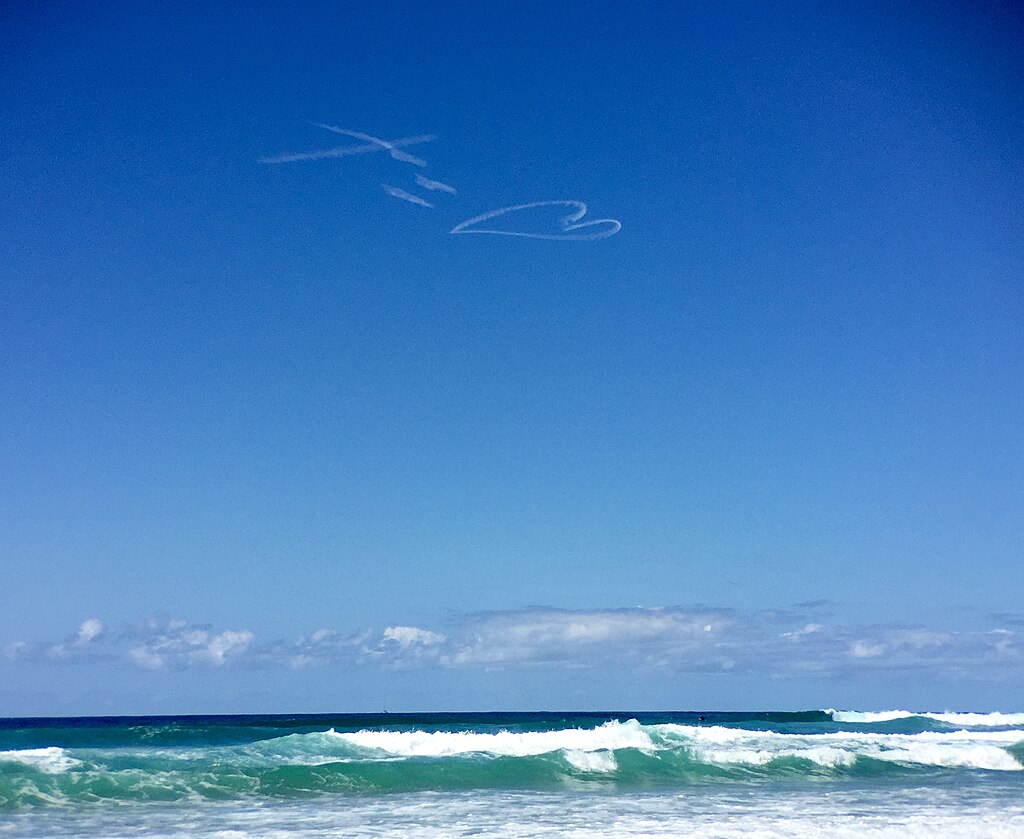
Photograph by Kgbo, via Wikimedia Commons. Licensed under CC BY-SA 4.0.
Are there any actual poems in Distant Star?
“The three poems were short; all less than ten lines,” Arturo B., our poet-narrator, says of the early verse of Alberto Ruiz-Tagle, the mysterious autodidact who one day appears, as if from nowhere, in the poetry workshop Arturo attends. “One described a landscape: trees, a dirt road, a house in the distance, wooden fences, hills, clouds.” No part of the poem is quoted; we’re given none of the text or texture. According to Marta, another young poet in their orbit, these weren’t Ruiz-Tagle’s “real poems” anyway; even the poems withheld from us are only stand-ins. Where, then, in Distant Star, are the “real poems”? One fateful night soon after Pinochet seizes power, the Garmendia sisters—“identical twins and the undisputed stars of the poetry workshop”—read their poems to Ruiz-Tagle (right before he’s revealed to be the murderous aviator Carlos Wieder), but they don’t read them to us; we’re just told their poems are “wonderful.” They “often described painters lost in the wilds of southern Chile, embarking on hopelessly ambitious works and hopelessly in love.” (The poems we don’t see are about impossible works of art.) Again and again, poems are characterized in a way that only makes them more opaque: “the opening lines were worthy of Isidore Isou, while the unexpected ending would not have been out of place in a Chilean folk song,” or “a narrative poem, which … reminded me of John Cage’s poetic diary spliced with lines that sounded like Julián del Casal or Magallanes Moure translated into French by a Japanese psychotic,” and so on.
The only poems (assuming we agree that they are poems) that the narrator quotes directly are those quickly disintegrating lines that Wieder—a member of Pinochet’s air force—writes with his plane across the sky. (Of course, type can only approximate vapor, so in a sense we’re presented with translations.) And yet even these lines begin to waver, Bolaño erasing with one hand what he writes with the other. “I managed to read the words DIXITQUE DEUS … FIAT LUX … ET FACTA EST LUX,” the narrator recalls, only to add, “though perhaps I was guessing or imagining or dreaming.” The unforgettable scenes of Wieder’s nihilistic skywriting possess a dreamlike indeterminacy, indeed; they seem to happen and not happen simultaneously: “But none of the generals or the generals’ wives and children or the senior officers or the military, civil, ecclesiastical, and cultural authorities present could read his words.” Is that because the words are projections, hallucinations? Even Wieder doesn’t seem to know: “He wrote, or thought he wrote: DEATH IS MY HEART.” Here, where we are supposedly reading the writing on the skywall, the sentences march toward contradiction, self-cancellation: “And then he had no smoke left to write with … but still he wrote.”
***
What are we to make of the resemblance between the sky-writing of Carlos Wieder and the work of the real Chilean poet and artist Raúl Zurita? Zurita, who was born in Chile in 1950, and who was imprisoned and tortured by Pinochet, founded CADA (Colectivo Acciones de Arte), known for its artistic demonstrations against the dictatorship. In June of 1982, Zurita hired airplanes to skywrite excerpts from his poem “La vida nueva” over Manhattan (lines that in their epigrammatic declarations recall some of Wieder’s “writing”). Is Bolaño indicting Zurita—suggesting, say, that when poetry becomes spectacle or political action it can easily be co-opted by the right? Does Distant Star imply that the right-wing and left-wing avant-gardes are interchangeable, both harboring the fantasy of obliterating the boundary between art and life and intervening directly in history? (Wieder can also be read as literalizing the “aeropoesia” of the Italian futurist Filippo Marinetti.) It is Wieder’s goal to plan “something spectacular to show the world that the new regime and avant-garde art were not at odds, quite the contrary.” Is Bolaño mocking Zurita’s messianic streak, or just giving in to petty rivalry?
Certainly, Distant Star is marked by an ambivalence about the relation between radical politics and art. Poetry morphs into political violence (or violent resistance)—and not just for the fascist Wieder. Juan Stein, the leader of the poetry workshop in which the narrator first meets Ruiz-Tagle/Wieder, treasures a photograph of the Red Army general Ivan Chernyakhovsky, to whom he is related. (Bolaño’s endless cascades of literary proper names, both historical and fabricated, here give way—almost without transition—to a litany of Soviet generals, as if literary and military history were interchangeable: “According to Stein, [Chernyakhovsky] was the greatest general of the Second World War. Bibiano … mentioned Zhukov, Koniev, Rokossovsky, Vatutin, and Malinovsky, but Stein stood firm.”) Stein often muses about getting rid of the general’s photo, saying that he will instead “use the frame for a photo he had of William Carlos Williams doing his day job as a small-town doctor,” which he claims would be more appropriate for a literature department. But even this fantasy about replacing a general with a poet involves a poet chosen because he was also a so-called man of action, had a real job—a doctor carrying his “black leather bag” full of medical instruments, not writing implements. (It’s unclear, by the way, if the photo in fact depicts Williams—the instability of authorship in Bolaño’s work extends to author photos.) After the coup, Stein disappears, only to surface “like a ghost wherever there was fighting, wherever desperate, generous, mad, courageous, despicable Latin Americans were destroying, rebuilding, and redestroying reality, in a final bid that was doomed to failure.” A doomed effort to destroy, rebuild, redestroy reality: Is that Bolaño’s definition of vanguard poetry or revolutionary politics or both? Does it involve any actual poems? For Stein and Wieder, art culminates in—or collapses into—violence, even if Stein is to be admired, Wieder feared and despised.
***
The poets, who may or may not write poems, disappear and reappear and disappear again, their names undergoing change, their identities never certain. (There are so many aliases and anagrammatic recombinations in Bolaño’s global literary underworlds, both within and across his books, that all proper names—even the historically verifiable ones—feel like pseudonyms.) The poem glimpsed only in paraphrase, the poet always in the process of vanishing—these are the central mysteries (both in the noirish and metaphysical senses) that animate Bolaño’s fiction. His gift is for making the poem and poet seem at once ludicrous, impossible, and like the most important thing in the world, or like something from another world, a distant star.
The literary critic Cleanth Brooks coined the phrase “the heresy of paraphrase” to warn against reducing a poem to its content and context, as if you could capture the essence of a poem while discarding its form. Part of Bolaño’s genius is the way he lets a species of heresy charge his prose. Bolaño’s paraphrases are of course fictions, purportedly secondhand accounts of things that didn’t exist in the first place, but through this fictional secondariness he smuggles in poetic effects. Here, for example, is Arturo B.’s description of the legal testimony given by the Garmendia sisters’ maid against Wieder when he’s tried in absentia for his crimes. (Note that it’s not only paraphrase, but translation, since “every second word was in Mapuche.”) Her testimony became
a cyclical, epic poem, which, as her dumbfounded listeners came to realize, was partly her story, the story of the Chilean citizen Amalia Maluenda, who used to work for the Garmendias, and partly the story of the Chilean nation. A story of terror. When she spoke of Wieder, she seemed to be talking about several different people: an invader, a lover, a warrior, a demon. When she spoke of the Garmendia sisters, she likened them to the air, to garden plants, or puppies.
We don’t know if Amalia’s analogies were a compelling part of her “epic poem” (“puppies” doesn’t sound particularly promising). We don’t get the specific analogies; we just get the raw material of likening. But this has its own power, as we imagine a range of possibilities (unencumbered by any actuality), just as Amalia’s speech about Wieder seems to describe several men at once, just as her story becomes several stories simultaneously. We are guessing, imagining, dreaming. My favorite passages in Bolaño’s books are such heresies, in which distance—translation, paraphrase, unreliability—enables a kind of negative capability, a spread of potential (and potentially contradictory) meanings. And maybe this is my own dream or projection, but when I read Bolaño’s flat, minimal descriptions of nonexistent verse, the prose begins to vibrate. “Trees, a dirt road, a house in the distance, wooden fences, hills, clouds”—instead of seeming to come after a particular poem, I have the inkling that this language is not yet a poem, that it is waiting for you or me to build it, give it form. Paraphrase becomes a protopoem. Heresy—if only for an instant—gives way to faith in the prospect of poetic making.
Arturo B., while paraphrasing Amalia’s cyclical epic, glosses Distant Star itself. For this book is partly the story of a Chilean citizen and partly the story of the Chilean nation, its political dreams and nightmares; it is a story of terror, a story about an inscrutable, chameleonic villain who might be a demon. And it is a story, like so many of Bolaño’s stories, in which poetry is everywhere and poems are nowhere to be found.
From the introduction to Roberto Bolaño’s Distant Star, translated from the Spanish by Chris Andrews, out from Picador in April.
Ben Lerner is the author of several books of poetry and prose, as well as collaborations with visual artists. The recipient of fellowships from the Fulbright, Guggenheim, and MacArthur Foundations, Lerner has been a finalist for the National Book Award for Poetry and the Pulitzer Prize for Fiction, among many other honors. He is a Distinguished Professor of English at Brooklyn College. His newest novel, Transcription, will be released by Farrar, Straus and Giroux in April.
Copyright
© The Paris Review

