
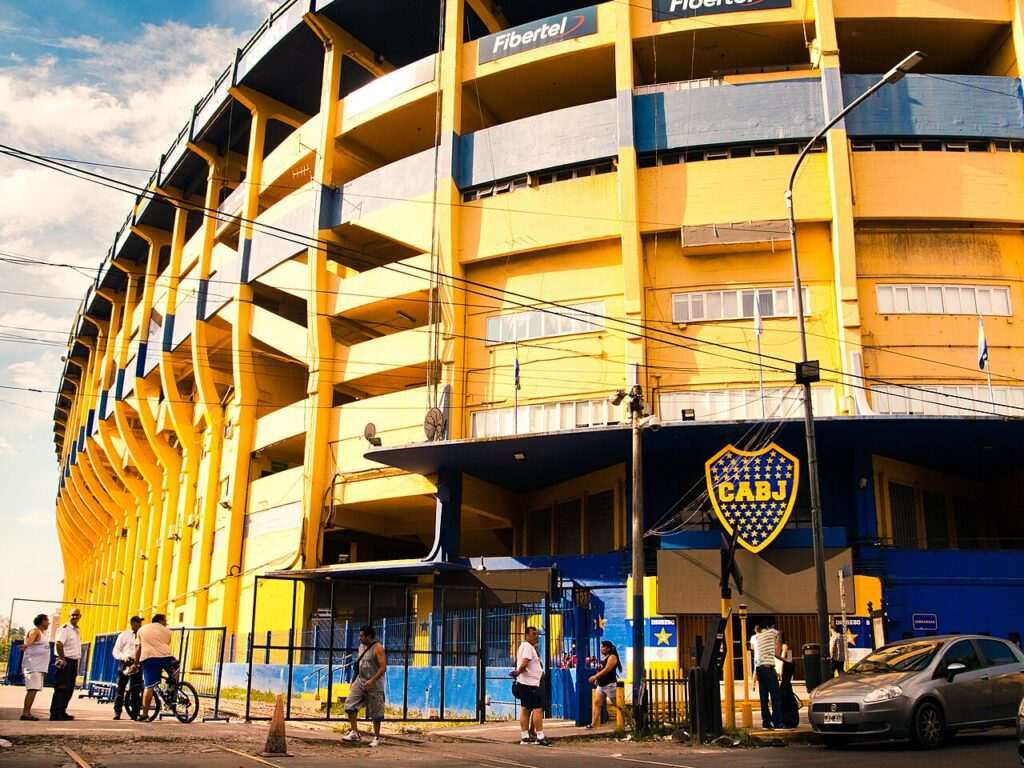
Photograph by Hernán Piñera from Marbella, via Wikimedia Commons. Licensed under CC BY-SA 2.0.
Clásicos are like Christmas for football. In these high-tension matches between fierce rivals, expectation almost always outstrips results. For months, fans visualize goals with the unrealistic yearning of a child who hopes for a new PlayStation from Santa Claus in exchange for a few cookies left out for his tired reindeer.
For me, the Superclásico between Buenos Aires’s Boca Juniors and River Plate on May 4, 2008, was preceded by thirty-four years of anticipation. In 1974 I went to the Estadio Monumental to see River–Boca, but I had never been to the reverse fixture in La Bombonera, that exceptional stadium that should have been examined by Elias Canetti in Crowds and Power.
The wait had charged the occasion with so much emotion that it was almost a shame it actually had to take place. Friends from Mexico, Colombia, and Spain had all similarly circled the date of May 4—the Argentine derby appeals not only to those who sleep in shirts emblazoned with the Quilmes beer logo but to an entire global tribe.
Like Everest or the Mona Lisa, the fame of Boca’s stadium is impossible to deny—look no further than the crowds of tourists who come to snap pictures. But does it really represent the pinnacle of footballing passion?
Copyright
© The Paris Review




.jpg)
