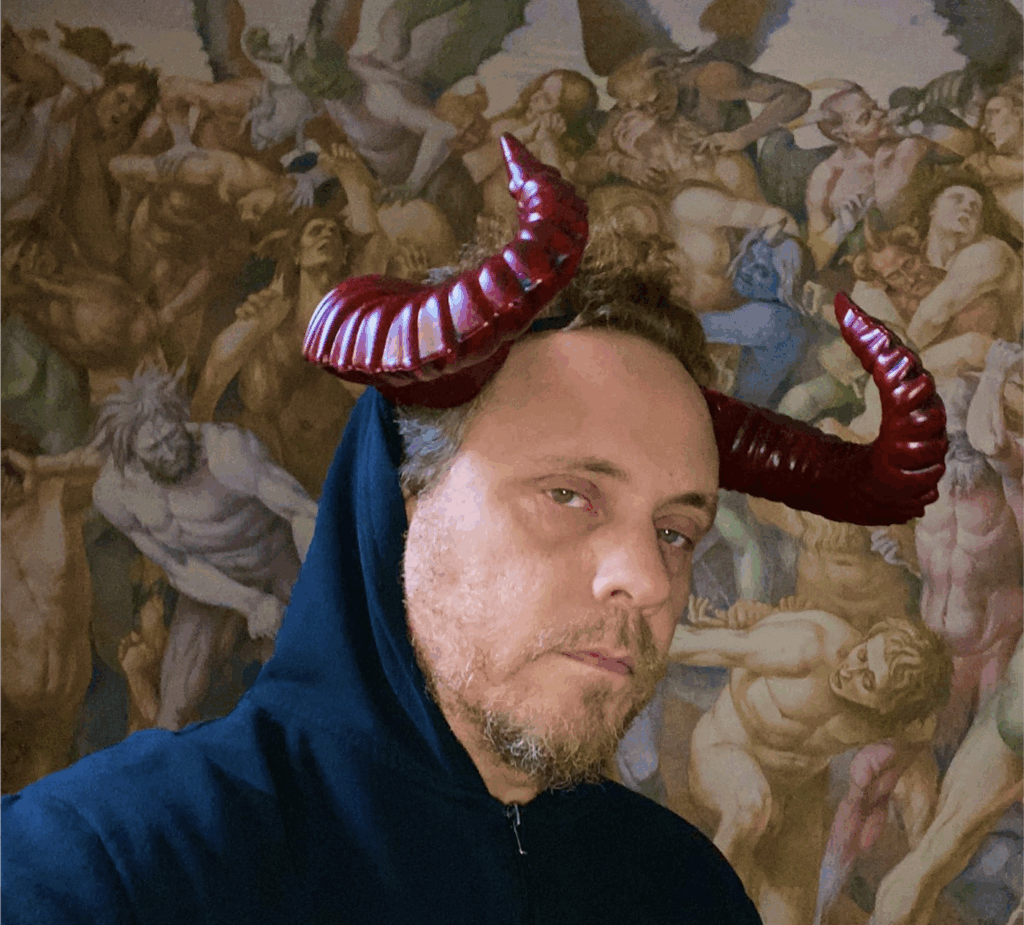
Selfie by Giancarlo DiTrapano.
Giancarlo DiTrapano was a friend, so take all this with a gram of salt. Gian had two arts at which he was preternaturally talented, what we’d’ve called his genius before that word just meant “smart guy.” One was, I guess you’d say, books. Sounds dumb, but that’s what he did and was good at. He found people who wrote, not always writers, and coaxed them into writing books that were wildly better than what the rest of the book world was crapping out in any given year. I know this probably sounds more like management than art. It’s hard to consider editing an art if you haven’t seen it being done, and publishing is full-well up the stairs at the sausage factory.
The books Gian put out weren’t sausages. The writing he knew how to find and to encourage was great from sentence to sentence, that was obviously the big part of it, but the books weren’t just a casing for the writing. The books themselves were fucking Things. They were objects of care and craft—the design, the cover, the typeface, the size of the paper, the blurbs(!), everything was hand-wrought to fit perfectly together with the writing and the writer as one discrete deal, the way a Pink Floyd album in its proper sleeve is. This was at a time when smaller independent imprints would sometimes have a uniform house style that looked all right, and the major publishing houses routinely put out books that looked like slapped-together dog shit. He’d do one or two of these guys in a year, obsessing over them through the whole process, talking endlessly about them the whole way through from manuscript to galley. No one makes two sausages a year without taking a major bath on the enterprise.
Anyways, if you have a hard time picturing publishing as an art, you’re really not gonna like his other talent, which was friendship. Yes, I know that also sounds dumb. You had to see it.
In perhaps the most bejaded of times, in the most jading city in America, Gian practiced an insane and earnest form of near-perfect fraternal love. The quintessential example is when Michael Bible from the Los Angeles Review of Books, whom he’d never met, came over to interview him. Gian greeted him at the door with a silver platter of cocaine and ended the night by safeguarding the reporter’s blacked-out body into a cab with a fresh pack of cigarettes in his pocket for the morning. And again, to emphasize, this was a stranger.
Copyright
© The Paris Review