The Pop Icon Set to Star in THE BELL JAR

Welcome to Today in Books, our daily round-up of literary headlines at the intersection of politics, culture, media, and more.

Birds of a Feather

Here is the most exciting sentence I will write all week: Sarah Polley is set to direct an adaptation of The Bell Jar. Here is the headline you’ll see everywhere else: Billie Eilish is set to star. Can she act? Who knows. Does it matter? Probably not. If Wuthering Heights can survive Emerald Fennell’s Hot Mess Express—and it certainly can; no adaptation, however bad, has yet ruined the legacy of the book—Sylvia Plath’s beloved novel will be fine. And with Polley at the helm, it might actually be good. Can you name a better author-director pairing than Sylvia Plath and Sarah Polley? I’ll wait.

Wild if True

This is a Project Hail Mary fan account for the next few weeks, and wow, is the press tour for the adaptation a gift. First there was Ryan Gosling being interviewed by a reported stranded in the desert, and now Ray Porter, who delivered a god-tier performance narrating the audiobook edition, has revealed that he went into the studio for it without having read the novel. I’m choosing to suspend my disbelief and lean into my ignorance of the ins and outs of audiobook production because, frankly, it’s fun to believe that one of the best experiences I’ve ever had with an audiobook is the product of the narrator having his own organic experience with the story and characters. Want to know what all the hype is about before you see the movie? There’s a Zero to Well-Read episode to catch you up.

Deep Sigh

Welcome to today’s edition of Old Man Shakes Fist at Clouds. I’ve run the whole gamut of reactions to Luke Winkie’s piece in Slate about romance readers’ increasing preference for first-person narration, and I still don’t know what I think after reading it multiple times and sleeping on it. Mostly, I’m tired.

Winkie doesn’t present any textual meta-analysis or sales data to support his statements about the frequency or popularity of first-person narration. He conveniently ignores the fact that while the video at the center of his argument, created by BookToker Jennifer Lee, has on-screen text declaring her hatred of third-person POV, the full caption notes that third-person is fine, actually, it’s just not her preference. (Shouts to my colleague Danika Ellis for catching this detail.) Winkie’s choice to use Lee’s quote, which I do realize she gave willingly, that “Sometimes when I’m seeking out a new book, I want it to be as dumbed down as possible” feels cheap and lab-designed to prey on cultural anxiety about brain rot and the decline of reading.

Continue reading

Copyright

© Book Riot

0
  27 Hits

Oscars 2026: Who will win and who should?

Oscars 2026: Who will win and who should?

The BBC's expert film critics make their predictions

Copyright

© Book Riot

0
Tags:
  26 Hits

Zin Taylor at Quartz Studio

January 21 – March 31, 2026

Copyright

© Book Riot

0
Tags:
  26 Hits

Anna-Sophie Berger at art hall

January 31 – March 21, 2026

Copyright

© Book Riot

0
Tags:
  36 Hits

Bolaño’s Heresy: On Distant Star

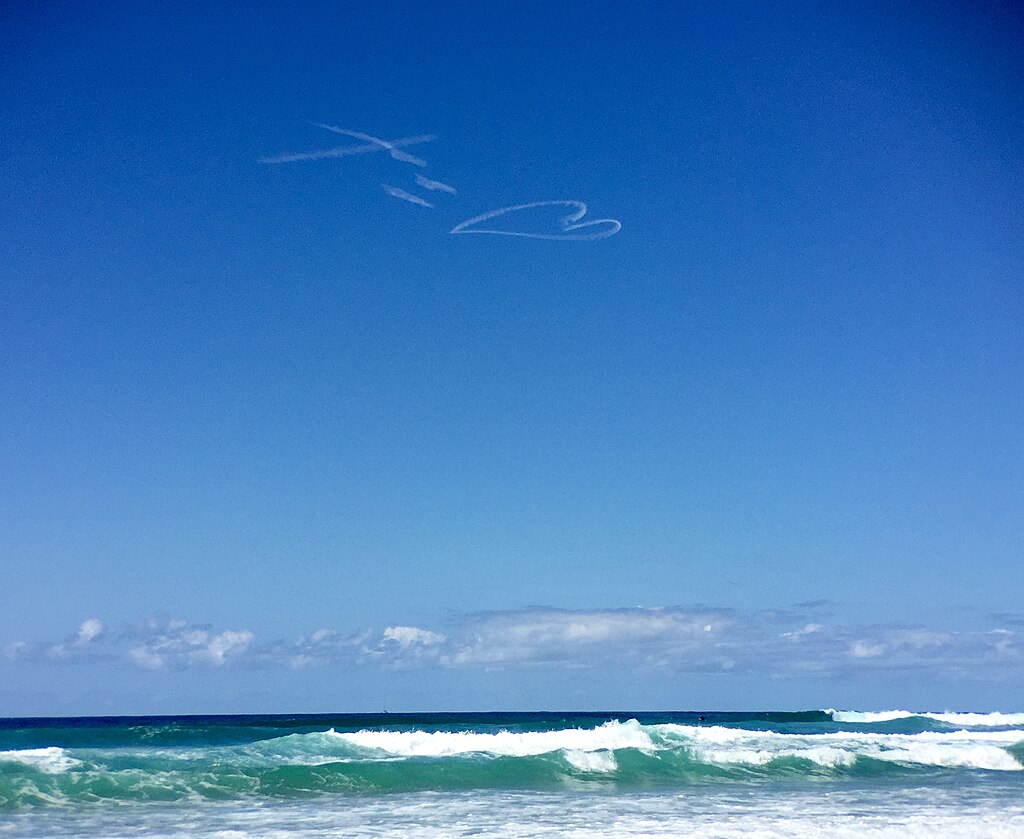
Photograph by Kgbo, via Wikimedia Commons. Licensed under CC BY-SA 4.0.

Are there any actual poems in Distant Star?

“The three poems were short; all less than ten lines,” Arturo B., our poet-narrator, says of the early verse of Alberto Ruiz-Tagle, the mysterious autodidact who one day appears, as if from nowhere, in the poetry workshop Arturo attends. “One described a landscape: trees, a dirt road, a house in the distance, wooden fences, hills, clouds.” No part of the poem is quoted; we’re given none of the text or texture. According to Marta, another young poet in their orbit, these weren’t Ruiz-Tagle’s “real poems” anyway; even the poems withheld from us are only stand-ins. Where, then, in Distant Star, are the “real poems”? One fateful night soon after Pinochet seizes power, the Garmendia sisters—“identical twins and the undisputed stars of the poetry workshop”—read their poems to Ruiz-Tagle (right before he’s revealed to be the murderous aviator Carlos Wieder), but they don’t read them to us; we’re just told their poems are “wonderful.” They “often described painters lost in the wilds of southern Chile, embarking on hopelessly ambitious works and hopelessly in love.” (The poems we don’t see are about impossible works of art.) Again and again, poems are characterized in a way that only makes them more opaque: “the opening lines were worthy of Isidore Isou, while the unexpected ending would not have been out of place in a Chilean folk song,” or “a narrative poem, which … reminded me of John Cage’s poetic diary spliced with lines that sounded like Julián del Casal or Magallanes Moure translated into French by a Japanese psychotic,” and so on.

The only poems (assuming we agree that they are poems) that the narrator quotes directly are those quickly disintegrating lines that Wieder—a member of Pinochet’s air force—writes with his plane across the sky. (Of course, type can only approximate vapor, so in a sense we’re presented with translations.) And yet even these lines begin to waver, Bolaño erasing with one hand what he writes with the other. “I managed to read the words DIXITQUE DEUS … FIAT LUX … ET FACTA EST LUX,” the narrator recalls, only to add, “though perhaps I was guessing or imagining or dreaming.” The unforgettable scenes of Wieder’s nihilistic skywriting possess a dreamlike indeterminacy, indeed; they seem to happen and not happen simultaneously: “But none of the generals or the generals’ wives and children or the senior officers or the military, civil, ecclesiastical, and cultural authorities present could read his words.” Is that because the words are projections, hallucinations? Even Wieder doesn’t seem to know: “He wrote, or thought he wrote: DEATH IS MY HEART.” Here, where we are supposedly reading the writing on the skywall, the sentences march toward contradiction, self-cancellation: “And then he had no smoke left to write with … but still he wrote.”

***

Continue reading

Copyright

© Book Riot

0
  35 Hits

The homes revealing how Tudor people really lived

The homes revealing how Tudor people really lived

Oscar-tipped Hamnet has shone a light on the era's architecture and interiors

Copyright

© Book Riot

0
Tags:
  24 Hits

Luc Tuymans at David Zwirner

February 24 – April 4, 2026

Copyright

© Book Riot

0
Tags:
  25 Hits

Taiyo to Ame no Melody (Melody of Sun and Rain) at PALAS

February 7 – March 28, 2026

Copyright

© Book Riot

0
Tags:
  32 Hits

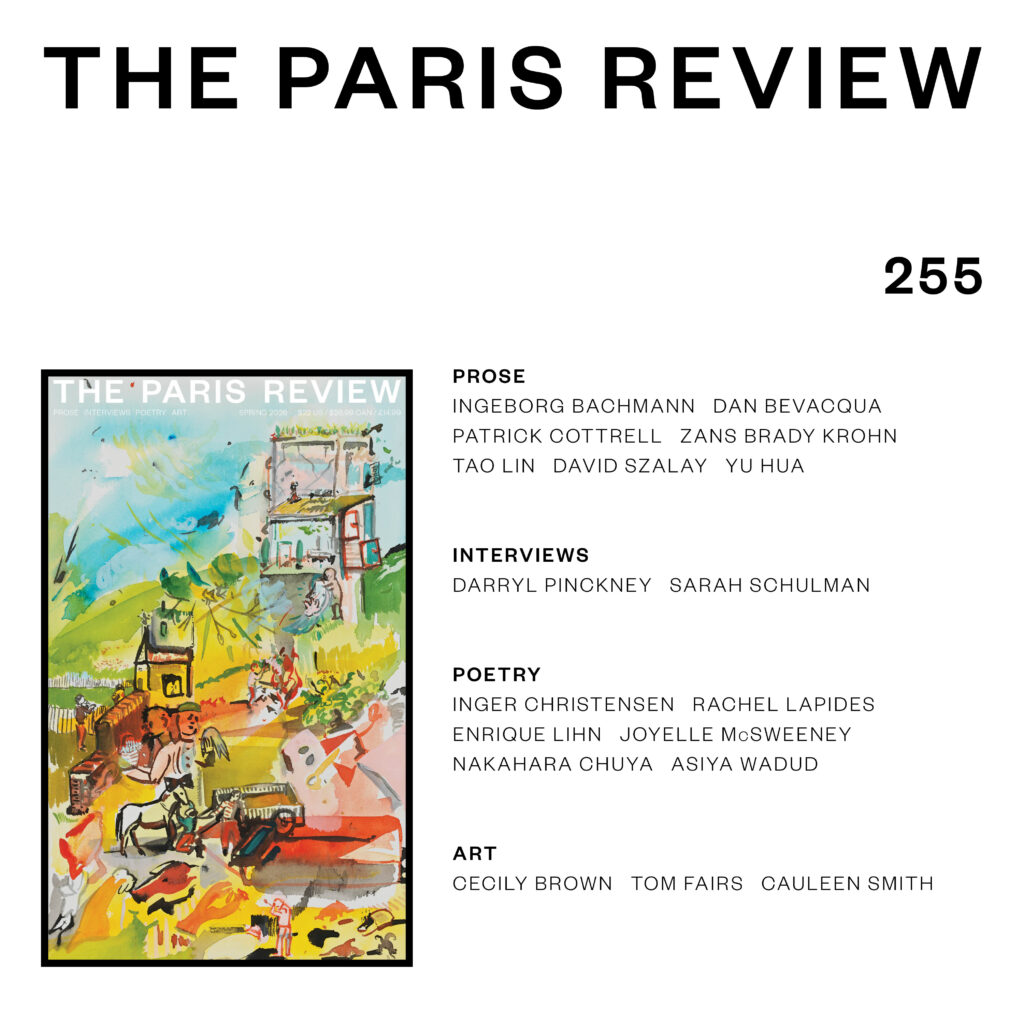
Announcing Our Spring Issue

As a child, the writer and activist Sarah Schulman memorized the whole of Bertolt Brecht’s Weimar-era play The Threepenny Opera, with music by Kurt Weill. “I glommed onto that record so bad,” she tells Parul Sehgal in her Art of Nonfiction interview in our new Spring issue. “I listened to it over and over and over and over and over.”

I thought of Schulman when, a few days after we sent the Spring issue to the printer, I visited my partner, who was on a long stay in Berlin, and we went to see the play at the Berliner Ensemble. Back in New York, the endless mounds of snow were studded with excrement and turning dark gray, as if they too were absorbing the foul news. Berlin was so clean—an escape from everything! I felt like I was on the run. But as we found ourselves enmeshed in the exploits of the con man, murderer, and rapist known as Mack the Knife, who evades his crimes through his connections with the powerful elite, we glanced at each other, eyes wide with recognition, and were reminded that there was nowhere to run to.

When my colleagues and I began working on this issue, no. 255, I had hoped that it might offer our readers a kind of reprieve. Yet as Brecht’s Peachum sings, “We would be good, instead of base / But this old world is not that kind of place.” And as I look over the pieces in these pages, I am forced to admit that they do not exactly offer the spiritual remedy that I had in mind. In fact, the issue carries its own freight of greed, irresponsibility, and moral injury. (Worse, as fans of Schulman’s Conflict Is Not Abuse might observe, the perpetrators often see themselves as victims!) Here are stories we fought over, stories we couldn’t shake, stories that have a way of taking things we’re supposed to love—innocence, books, solidarity—and toying with them disconcertingly.

It’s somehow fitting, then, that the cover for this issue, a painting by Cecily Brown, should make a fairground of the very idea of received wisdom. Entitled How many proverbs can you find in this picture and riffing on Pieter Breughel the Elder’s Netherlandish Proverbs, Brown’s scene is crowded with figures: crying over spilled milk, throwing stones from glass houses, tipping a baby out with the bathwater, holding a bird in the hand, pining for greener grass—so many figures, in fact, that it’s hard to locate where one proverb ends and the next begins, or to notice when we might inadvertently be inventing our own. As Inger Christensen writes, in a new translation by Denise Newman that also appears in this issue, “the eye forms a gateway”:

and in the midst of this gateway facing nothing

or facing a landscape that is not yet finished being drawn,we shall see the deer bearing History forward,

Continue reading

Copyright

© Book Riot

0
  31 Hits

Project Hail Mary is 'a mind-stretching sci-fi'

Project Hail Mary is 'a mind-stretching sci-fi'

The space epic stars Ryan Gosling as a solo astronaut trying to save humanity

Copyright

© Book Riot

0
Tags:
  30 Hits